
Blogs
Why Locally Manufactured Coolers Perform Better in Regional Climates
Jan
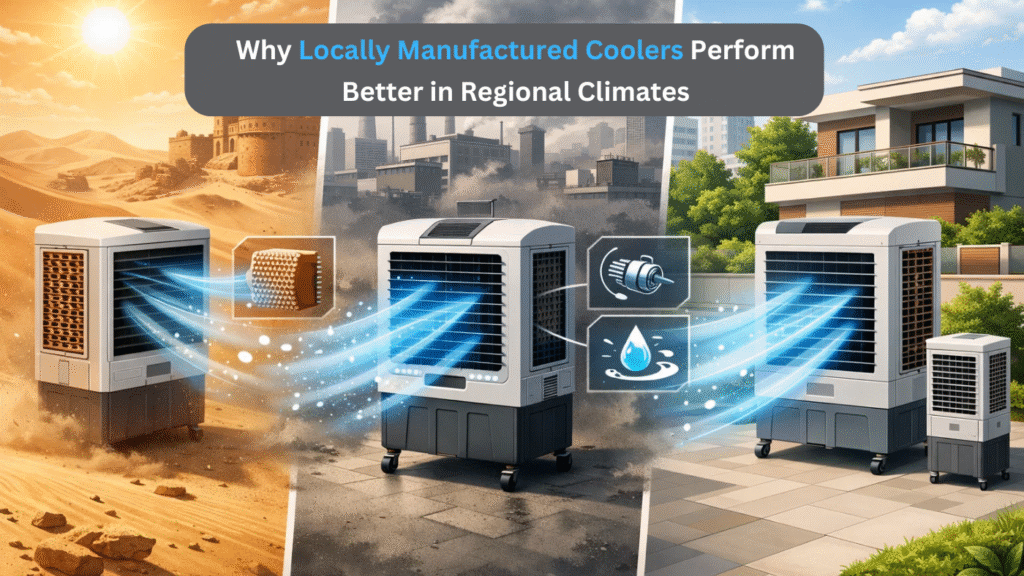
In a country as geographically diverse as India, cooling requirements vary dramatically from one region to another. From hot-dry desert zones to dusty industrial belts and semi-humid urban centers, environmental conditions play a decisive role in air cooler performance. This is precisely why locally manufactured coolers consistently outperform generic, mass-produced alternatives.
Unlike standardized products designed for global markets, local cooling solutions are engineered with regional realities in mind—making them more efficient, durable, and commercially viable.
Understanding the Impact of Regional Climate on Cooling Performance
Climate directly influences how effectively an air cooler functions. Temperature, humidity, dust density, airflow patterns, and water evaporation rates differ significantly across Indian regions.
A cooler that performs well in a humid coastal city may struggle in a dry, high-temperature zone. Dust accumulation, extreme heat, and prolonged operating hours further reduce efficiency if not addressed during design. This explains why one-size-fits-all cooling solutions fail in India’s diverse climate landscape.
What Makes Local Manufacturing Different From Mass-Produced Cooling Units
Local manufacturing allows design decisions to be shaped by actual usage patterns, not assumptions. Engineers understand regional customer behavior—such as longer runtime, power fluctuations, or water quality challenges—and adapt products accordingly.
Climate-specific engineering, supported by real-world field testing, ensures the final product performs reliably under local stress conditions. Generic production lines rarely account for such granular realities.
Locally Manufactured Coolers and Indian Climate Adaptability
In hot-dry regions like Rajasthan, Gujarat, and parts of Madhya Pradesh, air coolers must handle intense heat, heavy dust, and continuous usage.
Locally engineered designs focus on high airflow delivery and optimized evaporation efficiency, ensuring effective cooling even during peak summer conditions. These features make Indian climate coolers far more dependable in desert-like environments.
Material Selection Based on Regional Environmental Conditions
Material choice significantly affects longevity. Fiber and high-grade plastic bodies often outperform metal in hot climates due to their resistance to rust, heat deformation, and weather stress.
Locally manufactured coolers are built using materials tested against regional environmental conditions, resulting in lower maintenance and longer service life for end users.
Cooling Pad Compatibility With Local Weather Conditions
Cooling pads play a critical role in evaporation efficiency. Honeycomb pads generally perform better in dry climates due to higher water retention, while woodwool may suit other conditions.
Local manufacturers fine-tune pad thickness, density, and airflow compatibility to maximize cooling efficiency—something imported or generic models often overlook.
Power Efficiency and Airflow Optimization in Local Coolers
Fan size, motor capacity, and air throw are optimized based on regional power availability and voltage stability. This ensures balanced airflow with controlled power consumption.
For homes, offices, and commercial spaces, this translates into energy-efficient air coolers that deliver consistent performance without excessive electricity costs.
Why Locally Manufactured Coolers Last Longer in Regional Markets
Climate-aligned design reduces wear and tear. Components are built to tolerate dust, heat stress, and voltage fluctuations—leading to fewer breakdowns and longer operational life.
Compared to imported or generic models, locally manufactured coolers offer superior durability and reliability.
Advantages for Dealers and Distributors Choosing Local Manufacturers
From a business perspective, climate-suitable products move faster in the market. Dealers experience fewer customer complaints, reduced returns, and smoother warranty handling.
Local manufacturing also ensures better coordination, faster issue resolution, and stronger post-sale relationships.
Logistical and After-Sales Benefits of Local Manufacturing
Shorter supply chains mean faster delivery, consistent product availability, and easier access to spare parts. This improves trust between manufacturer, dealer, and buyer while minimizing downtime for customers.
Why Regional Manufacturing Builds Trust in B2B Cooling Markets
Institutional and commercial buyers prioritize consistency over short-term pricing. Regionally manufactured coolers deliver predictable performance, leading to repeat orders and long-term partnerships.
This trust-driven approach strengthens B2B cooling ecosystems.
How Local Manufacturers Innovate Based on Market Feedback
Direct market feedback enables continuous improvement. Product upgrades are based on real climate challenges rather than centralized assumptions, allowing innovation that directly benefits regional users.
Locally Manufactured Coolers vs Imported or Generic Coolers
In Indian conditions, local products consistently outperform imported models in durability, efficiency, and serviceability. While generic options may appear cost-effective initially, long-term value strongly favors locally made solutions.
Why Choosing a Local Cooler Manufacturer Is a Smart Business Decision
For retailers, distributors, and bulk buyers, regional manufacturers offer scalability, reliability, and alignment with seasonal demand cycles—making them ideal partners for sustained business growth.
